

Voltance
LiveElectrochemical analysis read as electrochemistry
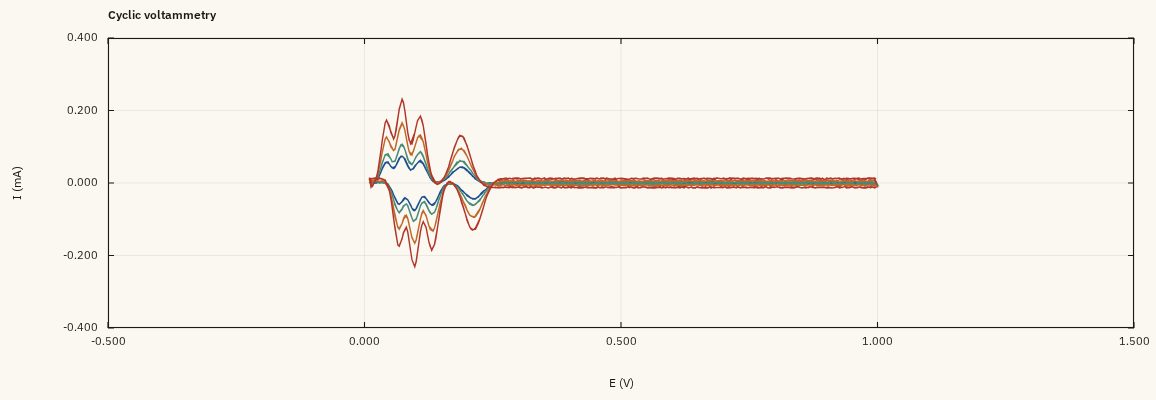
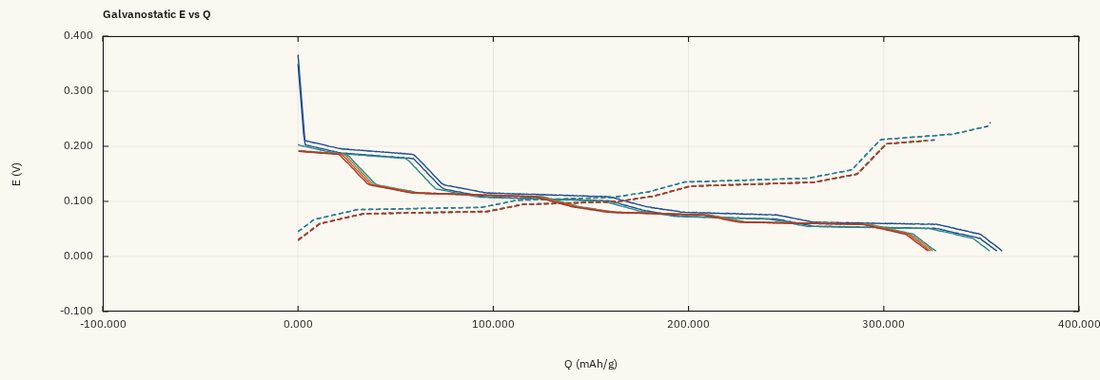
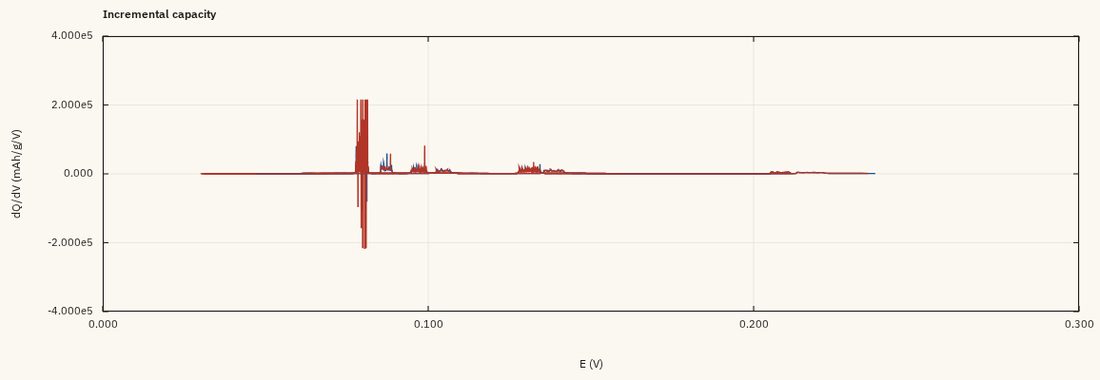
Cyclic voltammetry, galvanostatic cycling, incremental capacity, impedance and GITT — classified as techniques, not as spreadsheets.
A typical path in a battery or 2-D materials group still looks like this. Export ASCII. Guess which column is Ewe. Smooth dQ/dV by eye. Argue about whether first-cycle CE on graphite is Qcharge/Qdischarge or Qdelithiation/Qlithiation. Screenshot the GUI because the figure frame cropped the axis title. None of that is electrochemistry. It is file handling.
Voltance will not invent a diffusion coefficient when n or bulk concentration were never entered. It will not invert coulombic efficiency on an anode because the current column looks the wrong way. Incremental capacity is Savitzky–Golay, never a raw difference of a 10⁵-point file. Anodes report first-cycle CE as Qdelithiation/Qlithiation. Randles–Ševčík D and GITT D are withheld rather than decorated when the inputs are blank.
What it does
- Parsers for Bio-Logic, Gamry, Neware, Arbin, Maccor and CHI as electrochemistry, not as CSV
- Literature conventions for anode versus cathode first-cycle coulombic efficiency
- ICA with documented smoothing and named staging / H2–H3 features tracked against aging
- Nyquist fits that refuse a Warburg D invented from σ alone
- GITT D aligned with ICA peaks when molar volume, area and n are supplied — otherwise withheld