

Piezoic
LiveElectromechanical analysis with constitutive bookkeeping
d₃₃* is not d₃₃. keff is a privilege, not a formula. Geometry is live.
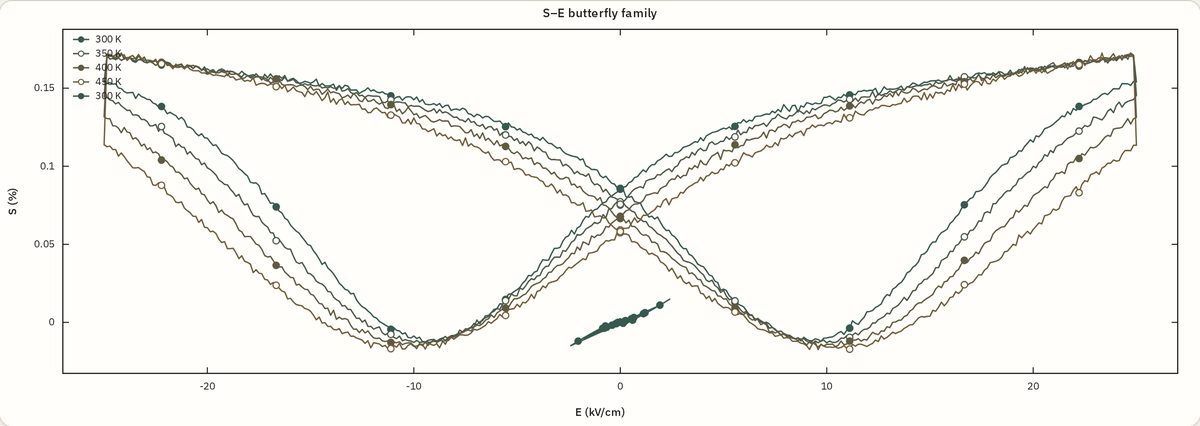
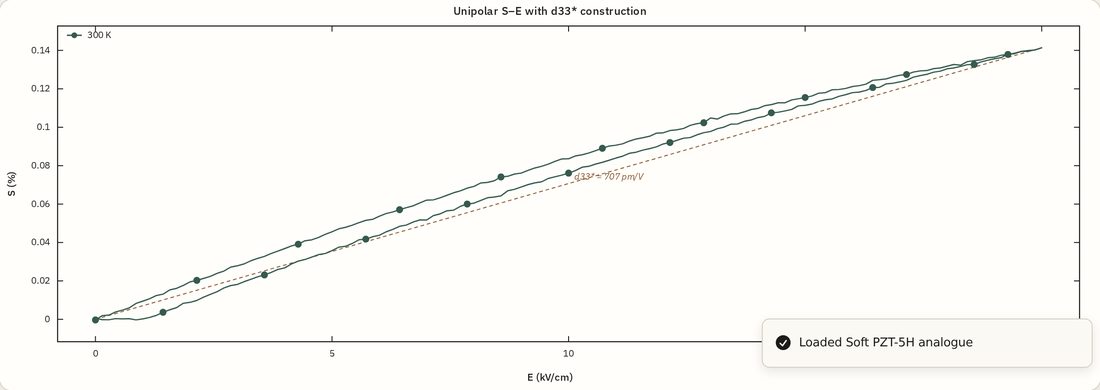
Displacement and voltage come off a ferroelectric tester as two columns. Thickness is applied later, if at all. The butterfly is drawn in Origin. Resonance is fitted in a second program. Direct d₃₃ lives in a third file. d₃₃* = Smax / Emax is then published as d₃₃. keff is reported on an overdamped resonator because the formula still returns a number. None of this is malice. It is what happens when the analysis tool has no constitutive model.
Piezoic inverts that order. Geometry is a first-class object. Every derived quantity carries its definition: d₃₃* is labelled large-signal; the high-field slope of a unipolar S–E loop is the only S–E number allowed to stand next to a Berlincourt reading; keff is withheld when the resonator is overdamped, sparse, or non-resonant. A 15 % disagreement between d₃₃* and constitutive d₃₃ raises a flag. High d·g, high k² and high Qm are three different optima.
What it does
- S–E and P–E families sharing specimen geometry, so S(P) and electrostriction tests are rearrangements, not a second experiment
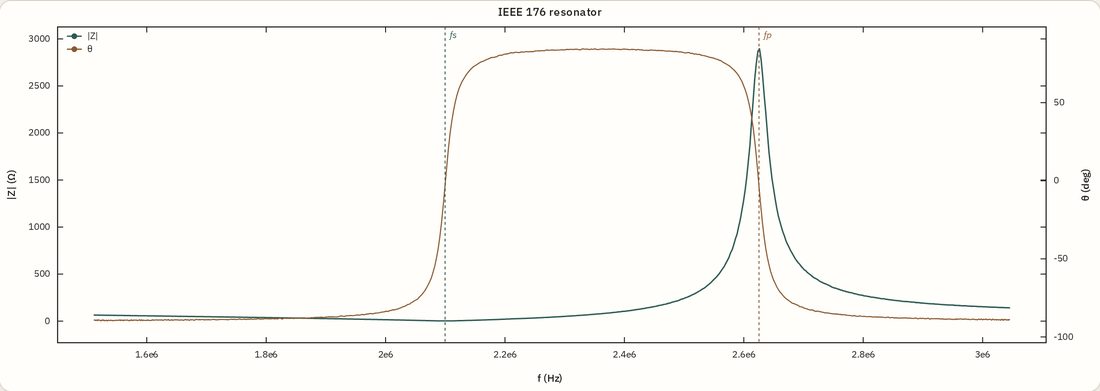
- IEEE 176 / EN 50324 resonance with keff withheld when the resonator is not actually resonant
- Berlincourt d₃₃(T) with heat/cool Td and hysteresis called out rather than hidden
- Rayleigh dinit + α E₀ on subcoercive minors as a quantitative signature of domain-wall mobility
- Constitutive FOMs sourced: g₃₃, e₃₃, k², d·g name their d₃₃ origin; giant d₃₃* is not allowed to inflate d·g